
Shark Universe: Survival World
Supercent, Inc.Action
4.4518.00 Reviews
- Version
- 36.0.0
- Installs
- 5.00M
- Age Rating
- Everyone
Screenshots
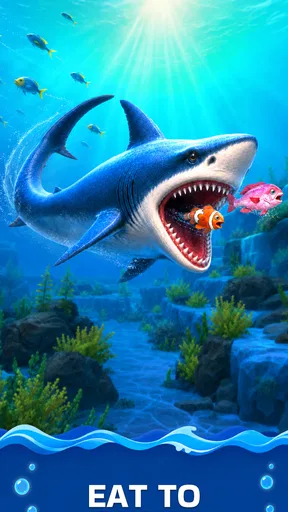

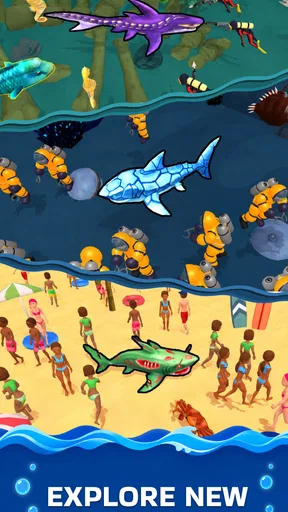
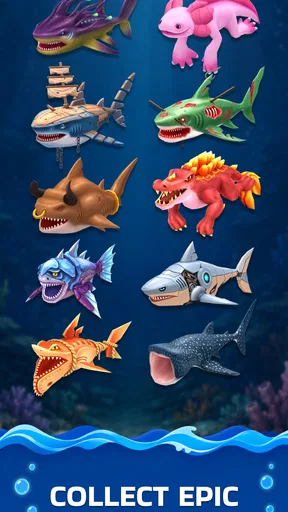
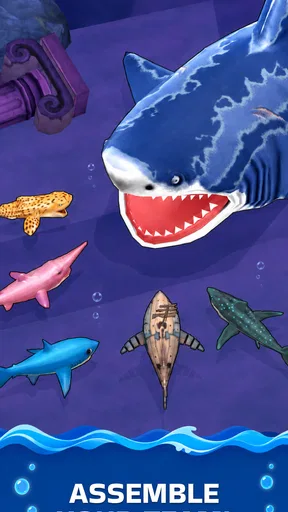
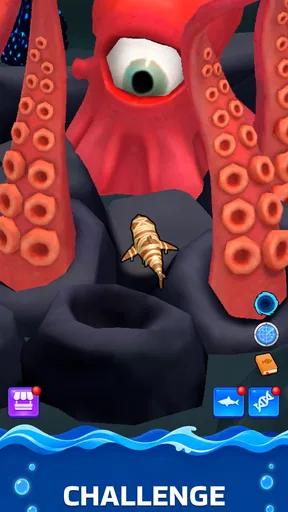
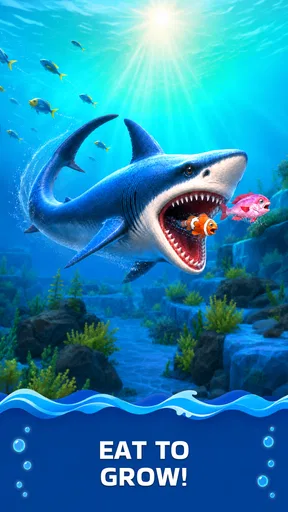
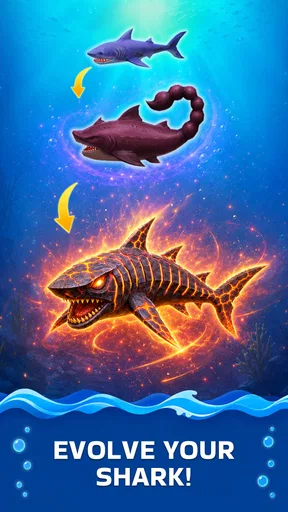
Our Review of Shark Universe: Survival World
 Analysis by Appyee
I spent time with Shark Universe: Survival World as a quick-action mobile game, and my first impression was easy to understand: it puts me in control of a growing shark and asks me to survive by choosing what to eat and when to move away. That straightforward idea makes it approachable, but the real question is whether the moment-to-moment play remains comfortable for different players, environments, and physical abilities.
This is a free action game from Supercent, Inc., aimed at Everyone. It is available for Android devices running version 6.0 or later, and the current version is 36.0.0. The game has reached over five million installs and holds a 4.5 average from roughly fifty-six thousand ratings, which suggests that its simple survival loop has found a broad audience. Optional in-app purchases range from $0.99 to $39.99 per item, so I would approach it as a free experience with monetization rather than as a completely purchase-free game.
How Shark Universe feels to read, control, and revisit
I look at Shark Universe through the way its simple survival premise shapes the experience: it is easy to understand, yet staying focused on the moving scene is part of the challenge. In this section, I’ll consider how that clarity affects reading the screen, handling touch controls, and returning for another short session. From there, I’ll turn to the practical choices that make the game more comfortable to play.
Clear goals make the opening easy to follow
The strongest accessibility advantage here is conceptual clarity. I do not need to learn a complicated story, a large collection of character classes, or a long chain of objectives before I can understand what I am doing. The central loop is about eating suitable fish, becoming stronger, and avoiding situations that can end the run. That gives the game an immediate visual purpose even for someone who does not enjoy reading lengthy instructions.
That simplicity is especially useful when I play in short sessions. If I pick up the phone while waiting for an appointment or during a brief break, I can return to the basic goal without reconstructing a complicated plan. The game’s theme also communicates its premise quickly: a shark in a survival environment needs to judge targets and danger. For players who prefer learning through action rather than text, that is a sensible design choice.
Still, simple does not automatically mean perfectly readable. A survival game depends on recognizing edible targets, threats, boundaries, and changes in the shark’s strength. When several moving objects share the screen, visual hierarchy matters more than the wording of a tutorial. I found that I had to pay attention to the whole scene rather than focus only on the shark. That can be tiring for players who have difficulty distinguishing small moving elements or who need more time to process visual changes.
Navigation is approachable, but attention remains important
I would describe the navigation as friendly to newcomers because the game does not ask me to manage a large menu system before playing. The action is the main event, and that keeps the cognitive load lower than in many larger mobile games. Someone who is comfortable with touch controls can understand the basic relationship between movement and survival quickly.
The trade-off is that the game’s simplicity leaves less room for deliberate planning. This is not a slow strategy title where I can pause and inspect every option. I need to read the environment while the action is happening. That makes it less suitable for a player who wants a calm, highly adjustable experience, even though it can work well for someone who likes immediate feedback.
One practical habit helped me: I stopped chasing every tempting fish. Instead, I looked at the safest route first and treated food as an opportunity rather than an obligation. That small change reduced frantic movement and made the screen easier to interpret. It is a useful approach for anyone who finds fast visual scenes overwhelming, because it turns the game from constant pursuit into a series of short decisions.
The evolution theme gives progress a readable shape
The promise of evolving into a more powerful shark gives each successful choice a clear direction. I like that the progression is tied to the creature itself rather than being presented only as an abstract number. Even without a complicated explanation, the idea of growing through survival makes the objective feel tangible.
For younger players and adults who prefer direct feedback, this is more inviting than a game built around dense equipment screens. The shark is the focus, so progress feels connected to what I am controlling. At the same time, anyone looking for a deep upgrade system, extensive customization, or a story-driven campaign should keep expectations modest. The appeal is the survival loop, not a large role-playing framework.
Touch interaction and motor comfort
As a touch-first action game, Shark Universe asks for active movement and quick reactions. That can feel natural for players who use a phone comfortably with one or two hands. I could make short sessions work well by holding the device securely and keeping my movements controlled rather than making large swipes.
For players with limited dexterity, tremors, joint pain, or reduced precision, the important issue is not only whether the controls are easy to understand. It is whether the required movement can be repeated without fatigue. A game that looks simple may still be demanding if survival depends on frequent corrections. I would recommend trying it in short bursts rather than assuming that a clean concept guarantees physical comfort.
My best practical tip is to play with the phone supported on a table or cushion when possible. That removes some of the strain of gripping the device while concentrating on movement. It also makes it easier to stop between attempts. I would not treat this as a game designed specifically around alternative input methods; its natural audience is someone comfortable with ordinary touchscreen play.
Visual and sensory considerations
The ocean setting gives the game an immediately recognizable visual identity, but action scenes can still become busy. Players who are sensitive to motion, bright changes, or crowded screens may prefer lower-intensity sessions and a comfortable display setting on the device. I found that playing in a quiet environment helped me notice visual changes without competing noise.
Sound can add atmosphere, but I do not consider audio essential to understanding the basic premise. That is helpful when I am playing in public, at work during a break, or somewhere I need to keep the phone quiet. The game remains most useful as a visual experience, although players who rely heavily on audio cues should not assume that every important event will be communicated in a way that suits them.
For people with color-vision differences, the safest approach is to judge the game during an actual busy encounter rather than from its menus. The key challenge is distinguishing safe food from danger while objects move. If those elements do not separate clearly on a particular display, the game may become frustrating even if the controls themselves feel fine. Increasing overall screen brightness can help in some environments, but it cannot replace clear visual contrast.
Short sessions fit real daily situations
This game makes the most sense in everyday moments where I want a compact distraction without committing to a long narrative. I can imagine playing it while waiting for public transport, taking a short break between tasks, or relaxing before bed. The central objective is easy to remember, so I do not need notes or a long warm-up before returning.
There is also a useful distinction between playing at home and playing outside. At home, I can hold the phone steadily, use sound if I want it, and give the screen my full attention. On a noisy train or in a bright outdoor space, movement and small visual details may be harder to follow. I would avoid playing while walking or doing anything that requires awareness of traffic and surroundings. The game is convenient in short pockets of time, but it should not encourage unsafe multitasking.
Its Everyone age rating makes it easier to consider for mixed-age households, especially when a child enjoys animals and uncomplicated action. I would still supervise younger players around optional purchases. The free entry point is welcoming, but the presence of items priced from $0.99 to $39.99 means a family should use the device’s normal purchase controls and discuss spending before handing it over.
Who will enjoy it most
I think the best audience is someone who likes arcade-style survival, visible progression, and short attempts. Players who enjoy learning through repetition can gradually improve their judgement: which targets are worth approaching, when to retreat, and how aggressively to explore. The game rewards attention without requiring a large amount of background knowledge.
It can also suit players who want a lighter alternative to demanding action games. Compared with a competitive multiplayer title, it does not place me in a match against another person or require a social schedule. Compared with a large open-world adventure, it offers a much smaller commitment. That makes it easier to fit around work, school, or family responsibilities.
However, I would skip it if I wanted a carefully paced story, deep strategic planning, or a control scheme built around accessibility customization. I would also look elsewhere if I strongly dislike repeated survival attempts or monetized free-to-play design. A premium game with slower exploration may be a better match for someone who wants to examine every environment at their own pace.
Where the game creates friction
The main barrier is the combination of movement, visual scanning, and time pressure. Even though the premise is easy to grasp, surviving well requires me to process several things together. I need to watch the shark, judge nearby targets, avoid stronger threats, and decide whether a detour is worthwhile. Players with attention-related difficulties may find that the simple rules do not always produce a simple experience.
Another limitation is the lack of obvious room for a highly individualized control style. Players who need large controls, slower action, remapping, or alternative input should test the game carefully before investing time or money. I would not recommend buying optional items as a way to solve a comfort problem; purchases may change progression, but they do not automatically make physical interaction easier.
There is also a motivational trade-off. The evolution idea makes progress satisfying, but repeated attempts can feel similar if I am not in the mood to refine my approach. That is normal for this kind of survival game, yet it matters for players who need frequent changes of pace. When I wanted a relaxing experience, I played conservatively. When I wanted excitement, I accepted more risk. The game supports those two moods to a degree, but it remains built around action rather than meditation.
How I would approach the first sessions
I would begin with the goal of learning the screen, not maximizing the score or rushing toward the strongest shark. During the first attempts, I would watch how targets and threats are positioned and notice which movements cause unnecessary danger. This makes the game more manageable for players who need time to build visual familiarity.
I would also keep the phone at a comfortable distance and avoid playing with a low battery or in harsh glare. Those sound like ordinary precautions, but they matter more in a game where small visual decisions can determine whether a run continues. If the screen feels crowded, taking a short break is more useful than forcing another attempt while tired.
For children, I would explain one rule clearly: not every fish is worth chasing. That lesson is both practical and easy to remember. It encourages patience, reduces frantic movement, and turns the game into a small exercise in risk assessment rather than simple tapping at everything visible.
My inclusive verdict
After trying it, I see Shark Universe: Survival World as an approachable action game with a strong first-step advantage: its premise is instantly understandable. The shark, the food, the danger, and the idea of growing stronger all point in the same direction. That clarity helps players who want a game they can start quickly and revisit without a long explanation.
Its inclusive value is more limited when the focus shifts from understanding the rules to physically and visually handling busy action. Players who are comfortable with touchscreen movement and rapid visual decisions will probably find the experience easy to enter. Players who need slower pacing, adjustable controls, or very strong separation between moving objects should be more cautious.
The game’s free price makes testing straightforward, and its broad audience is reflected in its 4.5 average across around fifty-six thousand ratings. Supercent, Inc. has built something accessible in concept, even if it is not a universal fit in execution. I appreciate that I can play without a long commitment, but I would keep purchase settings protected and treat optional spending as separate from the question of comfort.
My final recommendation is simple: try it if you want brief, visual survival sessions and enjoy improving through repeated decisions. Use a supported grip, play in a low-distraction setting, and choose safe routes instead of chasing every possible meal. If your priority is extensive accessibility customization or a slower, more deliberate adventure, another game will likely serve you better. For the right player, though, this is a friendly little shark game that turns a very clear idea into an easy-to-pick-up challenge.
Verdict
Strengths of Shark Universe: Survival World
- Exploration feels rewarding with varied underwater environments.
- Survival mechanics add meaningful goals beyond simple ocean exploration.
- Creature encounters make the world feel active and unpredictable.
- Resource gathering encourages careful planning and route selection.
- The aquatic setting offers a refreshing alternative to typical survival games.
Limitations of Shark Universe: Survival World
- Progress can feel slow when important resources are difficult to find.
- Some areas may look repetitive after extended play sessions.
- Managing health, oxygen, and supplies can become demanding for newcomers.
- Creature behavior may occasionally feel inconsistent during encounters.
- The game may require considerable storage space on some devices.
Other Releases by Supercent, Inc.
View All
Snake Clash!
Arcade4.5

Pizza Ready!
Simulation4.4

Prison Life: Idle Game
Role Playing4.0

Dessert Factory Idle
Arcade4.7
Similar Picks in This Category
View All
Temple Run 2: Endless Escape
Imangi Studios4.1

PUBG MOBILE
Level Infinite4.3

Free Fire: 9th Anniversary
GARENA INTERNATIONAL I4.4

Talking Tom: Hero Dash Run
Outfit7 Limited4.3

slither.io
Lowtech Studios3.9

Sniper 3D:Gun Shooting Games
Wildlife Studios4.6
Frequently Asked Questions
What is Shark Universe: Survival World about?
Shark Universe: Survival World is a survival adventure game centered on exploring an ocean environment while controlling a shark. You typically search for food, avoid or confront dangerous creatures, discover underwater areas, and try to remain alive as the world becomes more challenging. Progress depends on learning the map, managing risks, and improving your shark’s abilities over time.
Is Shark Universe: Survival World free to download and play?
The game can generally be downloaded without an upfront purchase, but availability and pricing may vary depending on whether you use Android or iOS. Like many free survival games, it may include optional in-app purchases, advertisements, or both. Before installing, check the store listing carefully for current payment details, supported devices, and any age or content information.
Does the game require an internet connection?
An internet connection may be needed for the initial download, updates, advertisements, cloud features, or purchases. Some gameplay elements may work offline, but the exact experience can depend on the version installed and the device being used. If you intend to play while traveling, test the game without Wi-Fi first rather than assuming every feature will remain available.
Is Shark Universe: Survival World suitable for children?
The game may appeal to younger players because of its simple survival concept and underwater setting, but parents should review the store rating, advertising, and in-app purchase information before allowing installation. Shark attacks, creature combat, and survival themes can vary in intensity. It is also wise to enable purchase restrictions and check whether the game collects or shares user data.
What should I check before installing Shark Universe: Survival World?
Before downloading, confirm that your phone or tablet meets the required operating-system version and has enough free storage for the installation and future updates. Also review the latest screenshots, permissions, privacy policy, ratings, and user comments, since features can change. Players should expect exploration, resource management, combat or danger, and possible advertisements or optional purchases.
Play our best games!


